

RTP vs. Bonus Value Key Takeaways
Before you decide where to put your money, you need to understand what each term actually means.
- RTP is a fixed percentage set by the game; it dictates how much of your wager you can expect back over many spins.
- Bonus value includes sign-up offers, free spins, and loyalty rewards, which can increase your short-term bankroll but rarely affect the house edge.
- For sustainable long-term gambling profits , prioritizing high-RTP games and treating bonuses as a small boost is the most reliable strategy.
Table of Contents
- What Is RTP vs. Bonus Value ? Breaking Down the Two Metrics
- Return to Player (RTP)
- Bonus Value
- Why RTP vs. Bonus Value Matters for Long-Term Profits
- How RTP Drives Consistent Long-Term Gambling Profits
- Why Bonus Value Is Overrated for the Long Haul
- Practical Examples: RTP Slot Strategy in Action
- When Bonus Value Actually Helps
- How to Combine RTP vs. Bonus Value for Maximum Results
- Step 1: Always Check the RTP First
- Step 2: Evaluate Every Bonus Before Accepting
- Step 3: Track Your Play and Adjust
- Common Mistakes Players Make With RTP vs. Bonus Value
- Mistake 1: Assuming All Slots with Bonuses Are Equal
- Mistake 2: Ignoring RTP for Flashy Bonus Offers
- Mistake 3: Treating Bonuses as a Long-Term Strategy
- Useful Resources
- What does RTP stand for?
- Is bonus value more important than RTP?
- How do I find the RTP of a slot game?
- What is a good RTP for a slot?
- Do bonuses have wagering requirements?
- Can I win long-term with only bonuses?
- What is the difference between RTP and house edge?
- How do wagering requirements affect bonus value?
- Should I always take a casino bonus?
- What is the best RTP slot strategy ?
- Do all casinos offer the same RTP on the same slot?
- Can RTP change during play?
- How does bonus value compare with RTP in the long run?
- What is a bonus value comparison tool?
- Is free spins bonus better than deposit bonus?
- Do high-rollers need to care about RTP vs. Bonus Value?
- Can RTP be less than 100%?
- What happens if a bonus has no wagering requirements?
- Do RTP values vary between online and land-based slots?
- Is it possible to make a living from slot machines using RTP strategy?
- Final Verdict: Which Matters More for Long-Term Gambling Profits ?
What Is RTP vs. Bonus Value? Breaking Down the Two Metrics
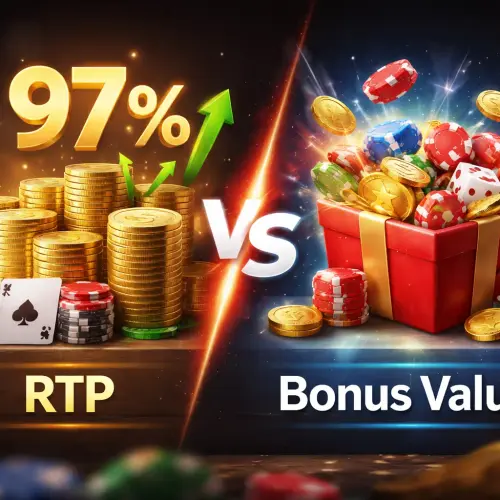
Before you decide where to put your money, you need to understand what each term actually means. RTP vs. Bonus Value represents two completely different ways that casinos attract and reward players. RTP is a theoretical long-term payout percentage built into every slot machine. Bonus value, on the other hand, is a short-term marketing tool that casinos use to lure you in.
Return to Player (RTP)
RTP stands for Return to Player. It describes the percentage of all wagered money that a slot game will pay back to players over many spins. For example, a slot with a 96% RTP means that, on average, for every $100 wagered, the machine will return $96 to players over time. The remaining 4% is the house edge.
- Fixed by game design: RTP is part of the slot’s core mathematics and cannot be changed by the casino (within regulated markets).
- Long-term perspective: RTP only becomes accurate over tens of thousands of spins. Short sessions can see huge swings.
- Critical for strategy: Choosing high-RTP slots (e.g., 97% or higher) is a foundational element of any RTP slot strategy.
Bonus Value
Bonus value refers to the extra money or spins a casino gives you when you sign up or make a deposit. It might look like free cash, but almost every bonus comes with strict wagering requirements and game restrictions. A $100 bonus might seem valuable, but if you need to wager it 40 times on a slot with a low RTP, the actual value shrinks dramatically. For a related guide, see How To Beat Wagering Requirements: 5 Proven Tips.
- Short-term benefit: Bonuses increase your bankroll temporarily but do not change the underlying game math.
- Wagering requirements: The number of times you must bet the bonus before you can withdraw winnings.
- Game restrictions: Many bonuses exclude high-RTP slots or contribute less to wagering.
Why RTP vs. Bonus Value Matters for Long-Term Profits
The central question is which factor has a bigger impact on your bottom line over months or years of play. The answer is clear when you look at the math. RTP vs. Bonus Value is not a fair fight, because RTP acts on every single wager you make, while bonus value is a one-time or periodic boost that quickly evaporates under wagering requirements.
How RTP Drives Consistent Long-Term Gambling Profits
If you consistently play slots with a 97% RTP, your expected loss per $100 wagered is only $3. Compare that to a player who picks a 94% RTP slot — their expected loss is $6 per $100. Over 10,000 spins, that difference adds up to thousands of dollars. High RTP gives you a smaller house edge, which is the single most important lever for long-term gambling profits.
Why Bonus Value Is Overrated for the Long Haul
Bonuses are great for extending your playtime, but they rarely change your expected value in the long run. Consider a typical welcome bonus: deposit $100, get $100 bonus, with a 35x wagering requirement on slots. You must wager $7,000 before you can withdraw anything. If you’re playing a 96% RTP slot, your expected loss during wagering is about $280. That means the bonus is actually costing you money, not making you money. Bonus value comparison reveals that most bonuses have a negative expected value unless you find very low wagering requirements or high RTP games.
Practical Examples: RTP Slot Strategy in Action
To make this concrete, let’s compare two players over a year of regular play. Both deposit $100 per month and wager $2,000 monthly. The only difference is their choice of slots and whether they chase bonuses.
| Player | RTP | Bonus Usage | Annual Expected Loss |
|---|---|---|---|
| Player A (RTP-focused) | 97% | None | $720 |
| Player B (Bonus-focused) | 94% | 4 bonuses/year (avg $50 each) | $1,680 |
Even with bonuses, Player B loses more than twice as much money. The bonus simply cannot overcome the 3% difference in RTP. This example shows why RTP vs. Bonus Value is a misleading comparison — RTP is mathematically dominant.
When Bonus Value Actually Helps
There are rare situations where bonus value can boost your bottom line. If a casino offers a low-wagering bonus (e.g., 10x or less) on a high-RTP slot (97%+), the expected value of that bonus can be positive. But such offers are rare and require careful bonus value comparison. Always read the terms carefully before assuming a bonus is a good deal.
How to Combine RTP vs. Bonus Value for Maximum Results
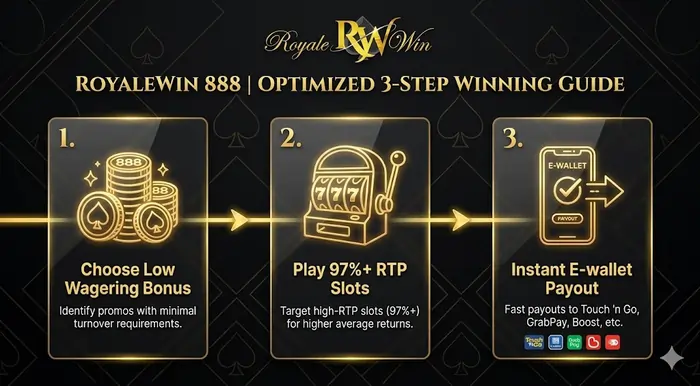
Smart players don’t have to choose one over the other. They use a layered approach: prioritize RTP for the long term, and selectively use bonuses only when they add positive expected value. Here is a step-by-step RTP slot strategy that works.
Step 1: Always Check the RTP First
Before you spin a single reel, look up the RTP for that game. Reputable casinos display RTP information in the game info or help section. Aim for slots with RTP of 96% or higher — 97%+ is even better. This is your foundation for long-term gambling profits.
Step 2: Evaluate Every Bonus Before Accepting
Do not accept bonuses automatically. Use a simple formula: (bonus amount) divided by (wagering requirement) equals the bonus’s contribution to your expected value. For example, a $100 bonus with a 30x requirement means you must wager $3,000. If you play a 97% RTP slot, your expected loss during wagering is $90, leaving only $10 of real value. If the bonus has no wagering requirement, it’s pure profit.
Step 3: Track Your Play and Adjust
Keep a simple log of your average RTP per session, your bonus usage, and your net results. Over time, you’ll see clearly which combination delivers the best results. RTP vs. Bonus Value becomes less theoretical when you have your own data.
Common Mistakes Players Make With RTP vs. Bonus Value
Even experienced gamblers fall into traps when balancing these two factors. Being aware of these mistakes can save you significant money.
Mistake 1: Assuming All Slots with Bonuses Are Equal
Many players grab a deposit bonus without checking which games it applies to. If the bonus restricts you to low-RTP slots, you are likely giving up more value than the bonus provides. Always read the terms for game contribution percentages.
Mistake 2: Ignoring RTP for Flashy Bonus Offers
A large bonus can feel like free money, but it rarely is. The house edge from low-RTP games eats away bonus value faster than most players realize. RTP vs. Bonus Value becomes a losing trade-off if you choose the bonus without checking the RTP.
Mistake 3: Treating Bonuses as a Long-Term Strategy
Bonuses are one-time events or occasional perks. No bonus can offset a 3-5% house edge over thousands of spins. The only sustainable path to long-term gambling profits is to minimize the house edge — which means prioritizing high-RTP games.
Useful Resources
- CasinoMeister’s RTP database — Comprehensive list of slot RTPs to check before you play.
- AskGamblers Bonus Terms Guide — Detailed explanation of wagering requirements and how to calculate real bonus value.
Frequently Asked Questions About RTP vs. Bonus Value
What does RTP stand for?
RTP stands for Return to Player. It is the theoretical percentage of all wagered money that a slot machine will pay back to players over many spins. A high RTP means a lower house edge.
Is bonus value more important than RTP?
No. For long-term play, RTP is far more important because it affects every single wager. Bonus value is a short-term boost that is usually eaten up by wagering requirements.
How do I find the RTP of a slot game?
Most online casinos publish RTP in the game’s info page or help menu. You can also check independent RTP databases like CasinoMeister or ask customer support.
What is a good RTP for a slot?
A good RTP for a slot is 96% or higher. Slots with 97% or above are excellent and give you the best chance for long-term profitability.
Do bonuses have wagering requirements?
Yes. Almost all casino bonuses come with wagering requirements, which is the amount you must bet before you can withdraw any winnings from the bonus.
Can I win long-term with only bonuses?
No. Bonuses are one-time or periodic offers and cannot overcome the mathematical house edge over extended play. RTP is the foundation for long-term results.
What is the difference between RTP and house edge?
RTP and house edge are two sides of the same coin. House edge = 100% – RTP. If a slot has an RTP of 96%, the house edge is 4%.
How do wagering requirements affect bonus value?
Higher wagering requirements reduce the effective value of a bonus because you must bet more money before you can access the bonus funds.
Should I always take a casino bonus?
Not always. You should evaluate the bonus terms — especially wagering requirements and game restrictions. Sometimes skipping a bonus is better than playing on low-RTP games.
What is the best RTP slot strategy ?
The best RTP slot strategy is to play only slots with RTP of 96% or higher, avoid bonuses with high wagering requirements, and track your results over time.
Do all casinos offer the same RTP on the same slot?
Not always. In regulated markets, RTP is usually fixed per game variant. However, some casinos may use a different RTP version of the same slot, so it is worth checking.
Can RTP change during play?
No. RTP is a fixed mathematical parameter set by the game developer. It does not change during a session or based on your betting pattern.
How does bonus value compare with RTP in the long run?
In the long run, RTP dominates because it applies to every bet. Bonus value is a one-time event that cannot compensate for a lower RTP across thousands of spins.
What is a bonus value comparison tool?
Some websites offer calculators that estimate the real value of a bonus after factoring in wagering requirements and game RTP. Use those tools before accepting a bonus.
Is free spins bonus better than deposit bonus?
Free spins often have lower wagering requirements and let you try a specific slot. Their value depends on the slot’s RTP and the terms attached.
Do high-rollers need to care about RTP vs. Bonus Value?
Yes, even more so. High-rollers wager large amounts, so even a 1% difference in RTP can mean thousands of dollars in expected loss. Bonuses matter less to them.
Can RTP be less than 100%?
Yes, by design. Every slot game has an RTP below 100% to ensure the casino has a mathematical edge. The only exception is some progressive jackpot games where RTP can exceed 100% in rare cases.
What happens if a bonus has no wagering requirements?
That is the best kind of bonus. You can withdraw the bonus immediately or use it to play with no restrictions. Such bonuses are very rare.
Do RTP values vary between online and land-based slots?
Yes. Online slots generally offer higher RTPs (often 95-98%) compared to land-based machines, which typically have RTP between 85% and 92%.
Is it possible to make a living from slot machines using RTP strategy?
Extremely unlikely. Even with perfect RTP slot strategy, the house edge always exists. Slots are designed for entertainment, not consistent income. No strategy guarantees long-term profit.
Final Verdict: Which Matters More for Long-Term Gambling Profits?
After comparing the numbers, examples, and real-world scenarios, the verdict is clear. RTP vs. Bonus Value is no contest when it comes to building sustainable long-term profits. RTP is the bedrock of your expected return, influencing every single dollar you wager. Bonus value can add a small boost, but it cannot save you from a low RTP over time. To maximize your chances of staying ahead, always start by choosing high-RTP games, then selectively add bonuses that offer positive expected value. Treat bonuses as a cherry on top, not the cake. This balanced approach gives you the best chance to enjoy gambling while minimizing unnecessary losses. For a related guide, see Best Games for Casino Bonus Wagering Malaysia: Smart Game Choices to Clear Bonuses Faster.