


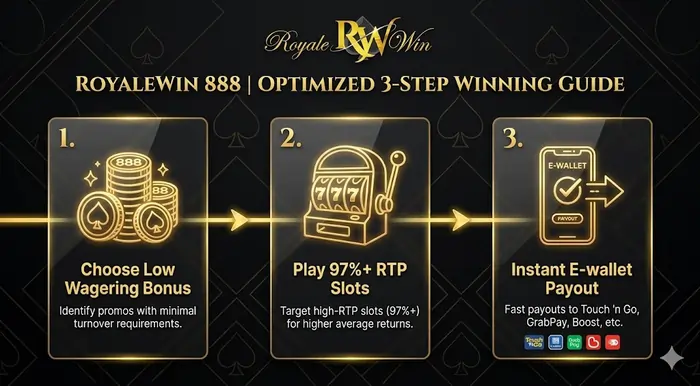
RTP Key Takeaways
Understanding the math behind RTP , volatility, and casino bonuses transforms how you evaluate promotions.
- RTP (Return to Player) is the theoretical percentage a game returns over infinite spins — a high RTP doesn’t guarantee short-term wins but improves long-term odds.
- Volatility dictates the size and frequency of payouts: low volatility offers frequent small wins, while high volatility can produce rare but large hits.
- Bonus promotion math combines RTP, wagering requirements, and game restrictions to reveal the true value of an offer — often much lower than the headline bonus amount.
Table of Contents
- What Is RTP and Why It Matters for Promotions
- How RTP Affects Bonus Wagering
- Volatility in Slots — The Other Side of the Math
- Low vs. High Volatility — Which One Fits Your Bonus?
- Casino Bonus Calculation — The Formula You Need
- Common Mistakes in Bonus Promotion Math
- How to Choose the Best Games for Bonus Play
- Step 1: Check the Contribution Table
- Step 2: Find the Highest RTP Eligible Game
- Step 3: Match Volatility to Your Bankroll
- Step 4: Calculate Expected Value
- Useful Resources
- What is a good RTP for slots?
- Does RTP guarantee I will win?
- How do casinos calculate wagering requirements?
- What is the best volatility for a bonus?
- Can I use table games for bonuses?
- What is the house edge?
- How do I calculate the expected value of a bonus?
- Do all slots have the same RTP ?
- What is the difference between RTP and volatility?
- Are high- RTP games always better for bonuses?
- What is a wagering contribution percentage?
- Can I withdraw bonus money directly?
- What is the max bet rule?
- How does RTP math help with promotion selection?
- Do progressive jackpots affect RTP ?
- What is the best RTP for low wagering bonuses?
- How do I find the RTP of a slot?
- What is the house edge on a 97% RTP slot?
- Can I beat the house using RTP and bonuses?
- What is the difference between sticky and non-sticky bonuses?

What Is RTP and Why It Matters for Promotions
RTP stands for Return to Player, and it’s the cornerstone of every slot, table game, and video poker machine. Expressed as a percentage, it tells you how much of all wagered money a game returns to players over a very long period. For example, a slot with a 96% RTP will, theoretically, return $96 for every $100 wagered — the casino keeps the remaining $4 as house edge.
When you’re evaluating a casino bonus, knowing the RTP of the games you plan to play is critical. High-RTP games (98% or above) give you a better chance of meeting wagering requirements without exhausting your deposit. Low-RTP games (below 95%) erode your bonus value faster, making it harder to convert the bonus into real cash. For a related guide, see Royalewin Promotions: 9 Best Real Cash Rewards in 2026.
How RTP Affects Bonus Wagering
Let’s look at a real-world example. You claim a $100 bonus with a 30x wagering requirement — that means you need to wager $3,000 before you can withdraw any winnings. If you play a slot with 96% RTP, your expected loss over that wagering is $120 ($3,000 × 0.04). That’s more than the original bonus itself. But if you use a game with 99% RTP, your expected loss drops to just $30, leaving you with a much better shot at profit.
This RTP math is why many bonus terms exclude high-RTP games or cap their contribution. Always check the game contribution table before you start playing. For a related guide, see Casino Bonus Design: 3 Psychology Tricks to Keep You Playing.
Volatility in Slots — The Other Side of the Math
While RTP tells you the long-term return, volatility in slots explains how those returns are distributed. A low-volatility slot pays out small amounts frequently, keeping your balance stable — ideal for grinding through a bonus. A high-volatility slot may give you dry spells of 100 spins or more, then hit a massive win that clears your wagering requirement in one go.
Matching volatility to your bonus strategy is a skill. If you have a large bonus with a low wagering requirement, low volatility helps you survive the playthrough. If you have a small deposit bonus with no wagering cap, high volatility might be worth the risk for a life-changing spin.
Low vs. High Volatility — Which One Fits Your Bonus?
Here’s a quick comparison to help you decide:
| Volatility Type | Payout Frequency | Win Size | Best For |
|---|---|---|---|
| Low | Frequent (every 2–5 spins) | Small (0.5x–3x bet) | Meeting wagering requirements safely |
| Medium | Moderate (every 10–20 spins) | Mixed (2x–20x bet) | Balanced risk during bonuses |
| High | Rare (every 50–200 spins) | Large (50x–5000x bet) | Hunting big wins with low wagering caps |
Knowing your volatility preference is part of smart bonus promotion math. A high-volatility game with a 96% RTP can still be a poor choice if your bankroll can’t survive the variance.
Casino Bonus Calculation — The Formula You Need
To determine whether a promotion is worth your time, use this simple formula:
Expected Value = (Bonus Amount × RTP) – (Wagering Requirement × House Edge)
Where House Edge = 1 – RTP (as a decimal). Let’s run an example. You receive a $50 bonus with a 25x wagering requirement. The game you choose has a 97% RTP.
- Bonus Amount × RTP: $50 × 0.97 = $48.50
- Wagering Requirement × House Edge: $1,250 × 0.03 = $37.50
- Expected Value: $48.50 – $37.50 = $11.00
You can expect to keep about $11 from this bonus on average — not amazing, but positive. If you were using a 94% RTP game, the expected value would be negative: $50 × 0.94 = $47, minus $1,250 × 0.06 = $75, giving -$28. That’s a losing proposition.
This is the core of casino bonus calculation. Always run the numbers before you opt in.
Common Mistakes in Bonus Promotion Math
Even seasoned players slip up. Here are the most frequent errors:
- Ignoring game restrictions. A bonus might say 100% match up to $200, but slots contribute 100% while table games contribute only 10%. Stick to slots with high RTP.
- Forgetting max bet limits. Many bonuses cap your maximum bet during wagering (often $5–$10). Playing above that can void your bonus and winnings.
- Overlooking time limits. A 30-day wagering period sounds generous, but high-volatility games may not pay out in time. Choose games you can finish within the deadline.
- Assuming RTP is fixed. Some progressive jackpot slots have lower effective RTP because the jackpot contribution reduces the base game return. Check the paytable.
How to Choose the Best Games for Bonus Play
Based on the math, here’s a step-by-step approach to selecting the right game for any promotion:
Step 1: Check the Contribution Table
Every bonus has a terms page listing which games contribute how much toward wagering. Slots usually contribute 100%, but some titles are excluded entirely. Always verify.
Step 2: Find the Highest RTP Eligible Game
Using the contribution table, identify the highest-RTP slot that contributes fully. Often this is a classic slot like Blood Suckers (98%) or Starmania (97.87%). Avoid games with RTP below 95% unless you have a specific strategy.
Step 3: Match Volatility to Your Bankroll
If you have a small deposit and the bonus is large, choose low volatility in slots to survive the playthrough. If you’re comfortable with risk and the bonus has a generous time limit, high volatility can turn a small bonus into a big win.
Step 4: Calculate Expected Value
Use the formula above. If the EV is negative, skip the bonus. If it’s positive but very small (under $5), weigh whether the time investment is worth it. A $2 expected value on a $100 deposit might not be worth the playthrough.
Useful Resources
For deeper dives into game RTP values and volatility ratings, check these authoritative sources:
- VegasSlotsOnline RTP Database — browse thousands of slots with verified RTP percentages and volatility ratings.
- Casino Meister Forums — read real player discussions about bonus terms, game choices, and promotional math.
Frequently Asked Questions About RTP and Bonus Math
What is a good RTP for slots?
A good RTP is 96% or higher. Many top-tier online slots offer 97%–99%, which gives you a better long-term expectation.
Does RTP guarantee I will win?
No. RTP is a theoretical average over millions of spins. In the short term, you can win or lose regardless of the RTP.
How do casinos calculate wagering requirements?
Wagering requirements multiply your bonus amount (and sometimes deposit) by a fixed number, e.g., 30x. You must wager that total before withdrawing.
What is the best volatility for a bonus?
Low volatility is generally safer for clearing wagering requirements because it provides steady small wins that keep your balance alive.
Can I use table games for bonuses?
Table games often contribute far less (e.g., 10% of your bet) or are excluded. Check the terms — slots are usually the best option.
What is the house edge?
The house edge is the casino’s statistical advantage, calculated as 100% minus RTP. A 96% RTP slot has a 4% house edge.
How do I calculate the expected value of a bonus?
Use the formula: (Bonus × RTP) – (Wagering Requirement × House Edge). A positive result means the bonus is theoretically profitable.
Do all slots have the same RTP ?
No. Each slot has its own RTP, which can vary by casino. Always check the game’s paytable or the casino’s info page.
What is the difference between RTP and volatility?
RTP measures long-term return percentage; volatility measures win frequency and size. Both matter for bonus strategy.
Are high- RTP games always better for bonuses?
Generally yes, but you also need to consider volatility and game restrictions. A 99% slot with high volatility might bust before you clear wagering.
What is a wagering contribution percentage?
It’s the percentage of each bet that counts toward wagering requirements. Slots usually contribute 100%; blackjack may contribute only 10%.
Can I withdraw bonus money directly?
Not usually. You must meet wagering requirements first. Some casinos allow immediate forfeit of the bonus to withdraw the deposit.
What is the max bet rule?
Many bonuses cap your maximum bet during wagering (e.g., $5). Exceeding it can void the bonus and any winnings.
How does RTP math help with promotion selection?
By calculating expected value using RTP and wagering, you can rank promotions and choose only those with positive expectation.
Do progressive jackpots affect RTP ?
Yes. A portion of each bet funds the jackpot, which lowers the base game RTP. The overall RTP includes the jackpot contribution.
What is the best RTP for low wagering bonuses?
Low wagering bonuses (e.g., 10x) work well with any RTP above 96%, but high RTP still gives better expected value.
How do I find the RTP of a slot?
Check the game’s paytable or info screen. You can also use third-party databases like VegasSlotsOnline.
What is the house edge on a 97% RTP slot?
The house edge is 3% (100% – 97%). Over the long run, the casino expects to keep $3 for every $100 wagered.
Can I beat the house using RTP and bonuses?
No strategy guarantees profit, but combining high-RTP games with positive-EV bonuses can tilt the odds in your favor over time.
What is the difference between sticky and non-sticky bonuses?
A sticky bonus is deducted from your withdrawal after wagering; a non-sticky bonus is added to your cash balance. RTP math applies to both.